

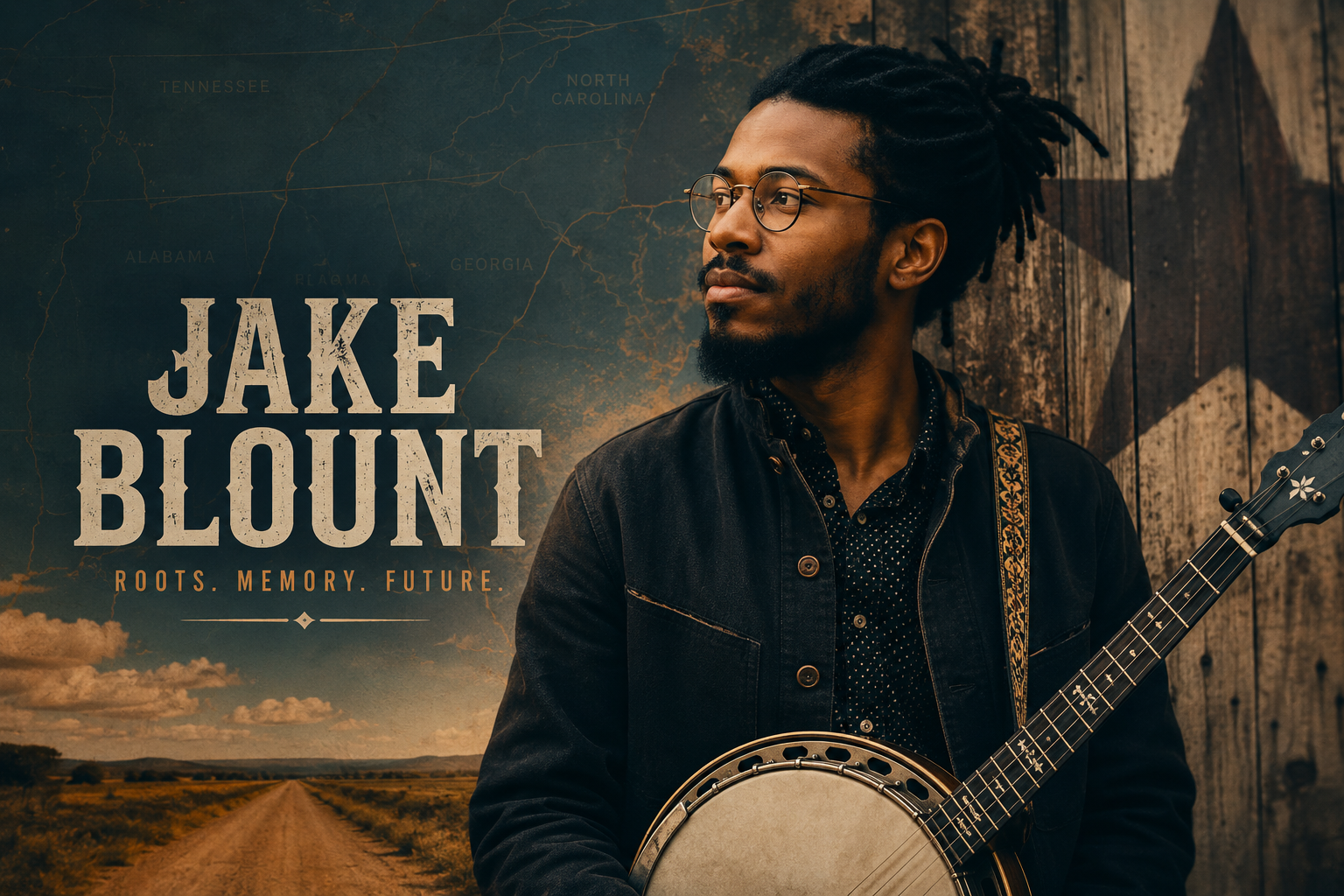
Jake Blount makes music that sounds simultaneously ancient and futuristic. A banjo player, fiddler, singer and ethnomusicologist, he has built his career around a provocative idea: American folk music cannot be fully understood without recovering the Black and Indigenous musicians who helped create it.
Born in Washington, D.C., Blount did not grow up immersed in old-time music. He started on electric guitar and played rock before a chance encounter with clawhammer banjo changed his direction. Learning that the banjo descended from West African instruments and developed among enslaved Africans in America sent him searching deeper into the history behind the sounds.
At Hamilton College, Blount designed his own ethnomusicology concentration focused on early Black American traditional music. He later continued his academic work at Brown University, while studying with musicians including Rhiannon Giddens, Hubby Jenkins and Bruce Molsky. That scholarship became the foundation for something far more adventurous.
Early recordings such as Reparations, made with fiddler Tatiana Hargreaves, reclaimed overlooked Black and Indigenous string-band repertoire. His acclaimed Spider Tales expanded that mission, while The New Faith transported traditional spirituals into an imagined world devastated by climate change. On symbiont, created with Mali Obomsawin, banjo and fiddle collide with synthesizers and electronic production as Black and Indigenous histories become tools for imagining survival.
Blount calls his approach “Afrofuturist folklore.” It is an apt description for an artist who refuses to treat traditional music as a museum exhibit. His music instead asks a fascinating question: What if America’s oldest songs still have something to tell us about America’s future?
For Jake Blount, preserving tradition does not mean freezing it in time. It means understanding where it came from, remembering who created it, and then having the courage to carry it somewhere new.