

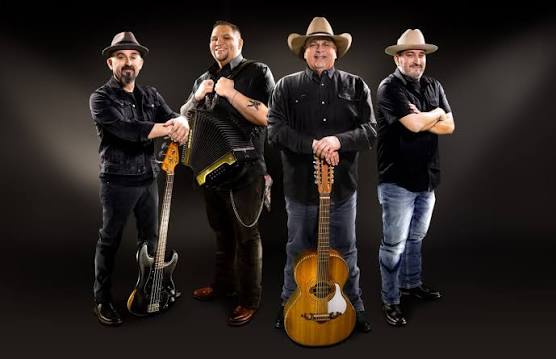
Los Texmaniacs occupy a distinctive place in American roots music, blending the traditional conjunto sound of South Texas with country, blues, rock, Western swing and broader Americana influences.
The band was founded in San Antonio in 1997 by Max Baca, a master of the bajo sexto, the twelve-string guitar-like instrument that provides much of conjunto’s rhythmic drive. Baca had already spent years performing with musicians connected to the Texas Tornados, whose lineup included Doug Sahm, Freddy Fender, Augie Meyers and legendary accordionist Flaco Jiménez. That environment shaped his musical outlook: Texas music was never confined to a single language or genre.
Los Texmaniacs built their sound around accordion, bajo sexto, bass, drums and vocals, drawing from rancheras, corridos, polkas, boleros, cumbias and huapangos. Their music also reflects the wider Texas landscape, where Mexican traditions have long interacted with country, blues, Western swing and rock and roll.
Their 2009 Smithsonian Folkways album Borders y Bailes won the Grammy for Best Tejano Album and established the group as one of the leading contemporary interpreters of conjunto. Later records expanded the conversation further. Texas Towns & Tex-Mex Sounds connected conjunto with Western swing, while Cruzando Borders paired Spanish-language border songs with American folk material, including Woody Guthrie’s “Deportee.” Collaborators have included Lyle Lovett, Flaco Jiménez, Ray Benson, Rick Treviño and La Marisoul.
At the center of Los Texmaniacs is a simple idea: Mexican American music belongs inside the American roots tradition. Their accordion and bajo sexto serve much the same cultural function that fiddles, banjos and steel guitars do elsewhere in Americana, carrying regional stories, family history, migration, dance and working-class life from one generation to the next.